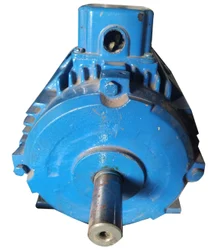
An induction motor is an electric motor that uses alternating current (AC) to convert electrical energy into mechanical energy. It's also known as an asynchronous motor.
Here's how an induction motor works:
Stator
The outer, stationary part of the motor that contains a ring of electromagnets that create a rotating magnetic field.
Rotor
The rotating part of the motor that contains electromagnets that are attracted to the stator's magnetic field. The rotor can be either a squirrel cage type or wound type.
Electromagnetic induction
The principle that a changing magnetic field induces an electric current, and vice versa. In an induction motor, the magnetic field created by the stator induces an electric current in the rotor, which produces torque.
Induction motors are highly efficient, flexible, and relatively simple in design. They are used in a wide range of applications, including household appliances like fans, refrigerators, and washing machines.
Here are some things to know about induction motors:
Squirrel cage motors
The most common type of induction motor because they are reliable, economical, and self-starting.
Single-phase induction motors
Require only one phase of power supply and are typically used for smaller loads. They are not self-starting, so they need an auxiliary mechanism to initiate motion.
Wound-rotor induction motors
Used in large induction motors where the starting current, torque, and speed need to be precisely controlled.
Slip
The difference between the synchronous speed of the stator's magnetic field and the actual rotor speed.